Stock code
300693
Eliminating Double Taxation & a 307 MW Surge: Why Czech BESS Early Movers Are Entering a 15%+ IRR Window
Czechia’s battery energy storage (BESS) market is entering a structural inflection point, driven by the convergence of regulatory liberalization, accelerating project pipelines, and rapidly evolving market-based revenue opportunities.
The recent announcement that trading firm Second Foundation plans to commission 307 MW of battery energy storage systems (BESS) by 2026, combined with emerging reforms to eliminate double taxation on co-located solar-plus-storage systems, signals that the market is shifting from early-stage experimentation toward commercial-scale deployment.
At the same time, near-term market conditions continue to support IRRs above 15% for early entrants operating in 2026–2029.
This creates a time-sensitive first-mover window for developers, utilities, and EPCs.
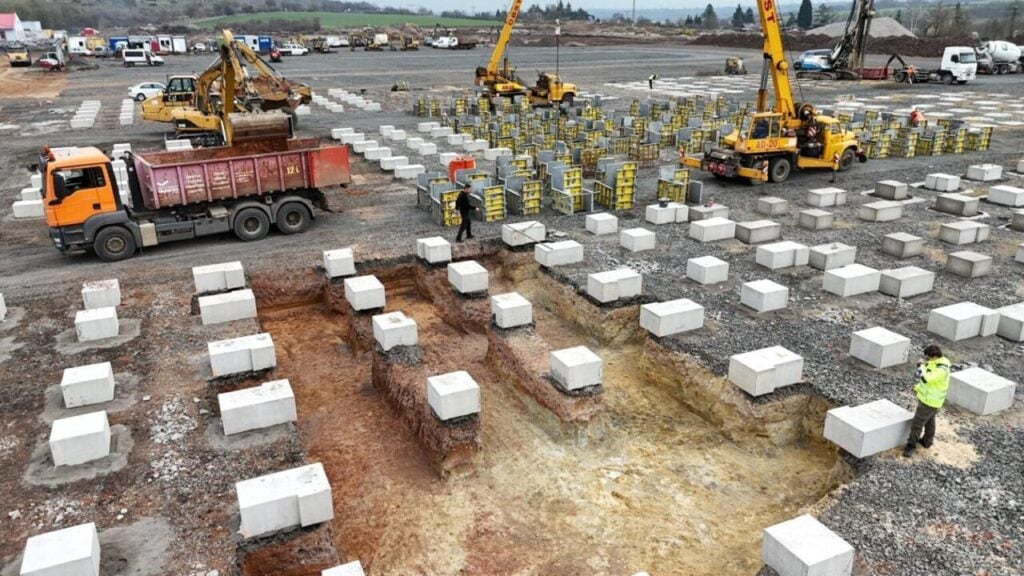
The three projects are under construction for operations this year. Image: Second Foundation.
Czechia’s energy system is undergoing a structural transition driven by coal phase-out commitments and renewable expansion targets.
The country aims to increase renewable electricity generation to approximately 30% by 2030, up from around 18% today. This transition is supported by an estimated CZK 2.8 trillion in required investment across generation, grids, and supporting infrastructure..png)
However, the underlying challenge is no longer capacity expansion—it is system flexibility..png)
Despite accelerating solar deployment, Czechia remains significantly behind the EU average in renewable penetration.
According to data:
.png)
This imbalance creates a structural flexibility deficit characterized by:
As a result, grid operators are accelerating investment in reinforcement, transmission upgrades, and system balancing capabilities.
Battery storage is increasingly positioned as a core enabling asset within this transition.
Czechia’s storage market expansion is being driven by a layered policy framework that is simultaneously improving capital access, market participation, and project economics.
The European Commission’s approval of a €279 million storage support scheme marks a key inflection point.
While the initial target was 1.5 GWh, market expectations now point toward approximately 6 GWh of installed capacity by 2030.
The strong oversubscription reflects:
The LEX OZE III amendment represents a structural regulatory shift.
It enables:
Importantly, it transitions Czech storage from predominantly behind-the-meter systems (historically ~98% of capacity) toward utility-scale participation.
A further policy proposal under review aims to eliminate double taxation for co-located solar-plus-storage systems.
Key measures include:
If implemented, this would materially improve:
This reflects a broader shift toward system-level optimization of renewable assets.
According to Aurora Energy Research, Czechia is transitioning into a Central European flexibility hub driven by extreme price volatility and structural supply-demand imbalance.
Key market conditions include:
In the early deployment phase, revenues are primarily driven by:
Under current market conditions, a typical two-hour BESS operating at moderate cycling frequency can achieve:
This phase is characterized by high margins driven by structural undersupply of flexibility.
As more than 1 GW of pipeline capacity connects to the grid, ancillary service markets are expected to gradually saturate.
This is likely to result in:
Between 2031 and 2040, energy arbitrage is expected to account for more than 80% of total battery revenues.
Longer-term value will increasingly depend onadvanced system capabilities such as grid-forming capabilities, black start, and artificial inertia..png)
Czechia’s storage market is not defined by capacity shortage alone, but by a narrowing opportunity window.
Early entrants are positioned to capture:
Late entrants are more likely to face:
This creates a classic front-loaded return structure with accelerating competition over time.
SINEXCEL is already supporting utility-scale storage deployment in the Czech market.
A recent example is our project in Loket, Czech Republic, where SINEXCEL solutions are helping maximize project profitability while ensuring reliable operation under demanding environmental conditions.
.png)
energy arbitrage
grid stabilization
fast-response ancillary services
Designed for outdoor deployment, the 1725kW PCS features a NEMA 3R protection rating, enabling stable operation even in harsh climates.
With a rapid 10 ms response time, the system supports highly responsive energy trading and grid balancing applications — increasingly important capabilities in renewable-heavy electricity markets.
The project demonstrates how advanced PCS technology can help investors balance two critical priorities simultaneously:
.png)
To date, cumulative global shipments of the 1725kW PCS have surpassed 1GW — a milestone that underscores market confidence in its reliability and adaptability across diverse regulatory and climatic environments. This installation reinforces SINEXCEL's proven capability in delivering PCS solutions for utility-scale energy storage projects worldwide..png)
Other than 1725kW PCS and its MV stations, SINEXCEL has developed a complete utility-scale product architecture, ranging from 750HVDC cabinets to 12.5MW MV stations, enabling flexible deployment across various large-scale storage scenarios.
.png)
At the core of this portfolio is the StellaON 1250K/1575K PCS, engineered to optimize:
With a focus on lifecycle efficiency and adaptability across diverse environmental, load, and grid conditions, it enables stable, high-performance operation in demanding large-scale deployments. Rather than focusing on a single operational metric, this comprehensive engineering approach ensures that project developers can achieve a significantly lower levelized cost of storage (LCOS) while maintaining maximum uptime.
The system supports multiple medium-voltage configurations:
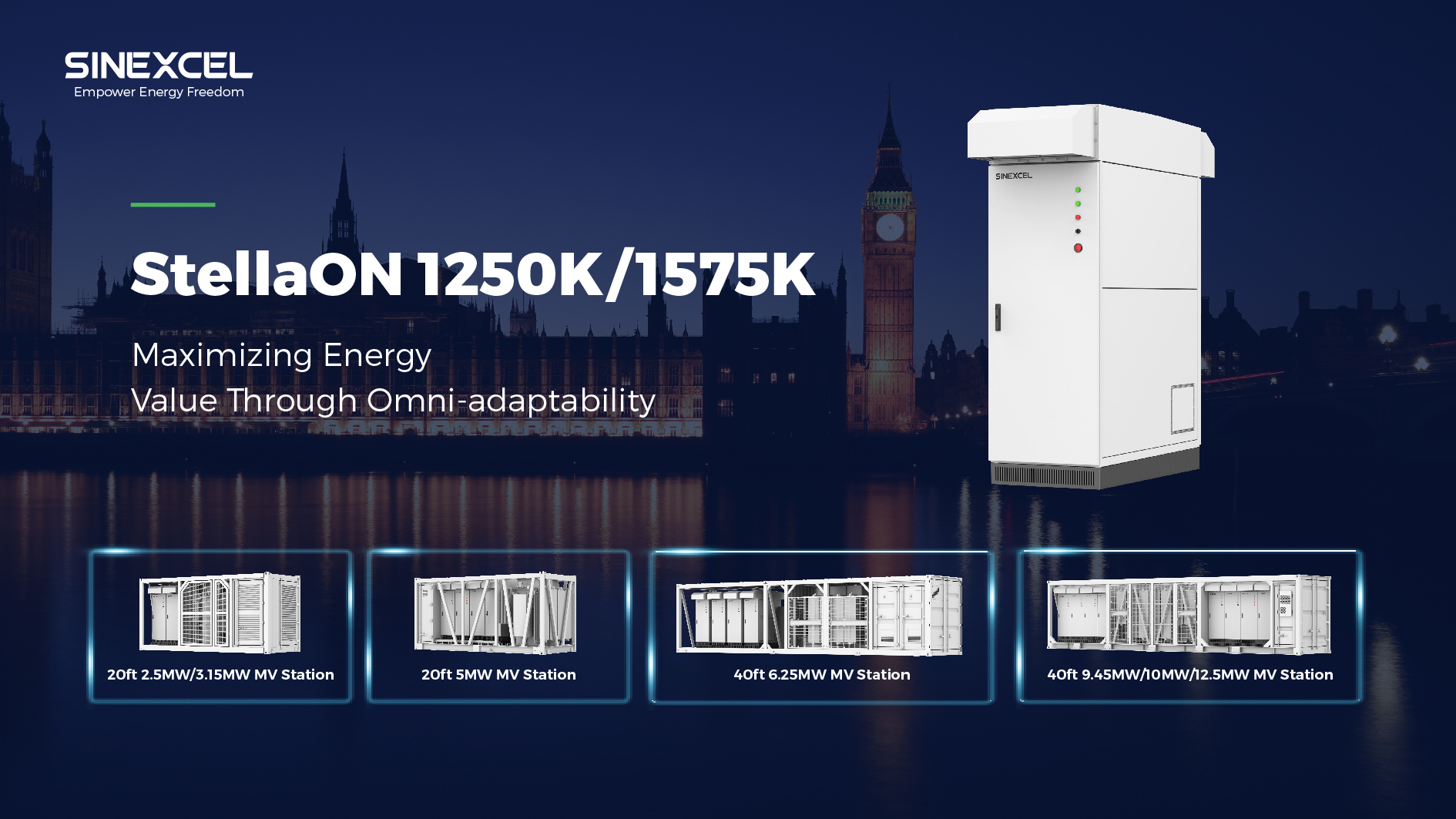
This scalability allows developers to efficiently scale capacity while reducing installation complexity and lifecycle costs.
As European grid standards continue to evolve, certification and compliance have become increasingly critical for utility-scale storage deployment.
SINEXCEL’s StellaON 1250K/1575K PCS is among the first utility-scale PCS solutions to secure Poland grid certification and PTPiREE listing under the new 2025 requirements.
Combined with key European certifications including:
the StellaON series is designed to meet the stringent technical and safety requirements of highly regulated international markets.
Beyond certification, the StellaON series has already demonstrated its capabilities in real-world utility-scale applications.
One recent example is SINEXCEL’s grid-connected BESS project in Vietnam — a 2.5 MW / 5 MWh installation deployed in partnership with Great Power and local EPC partner XCE Energy for Vietnam Electricity Group (EVN).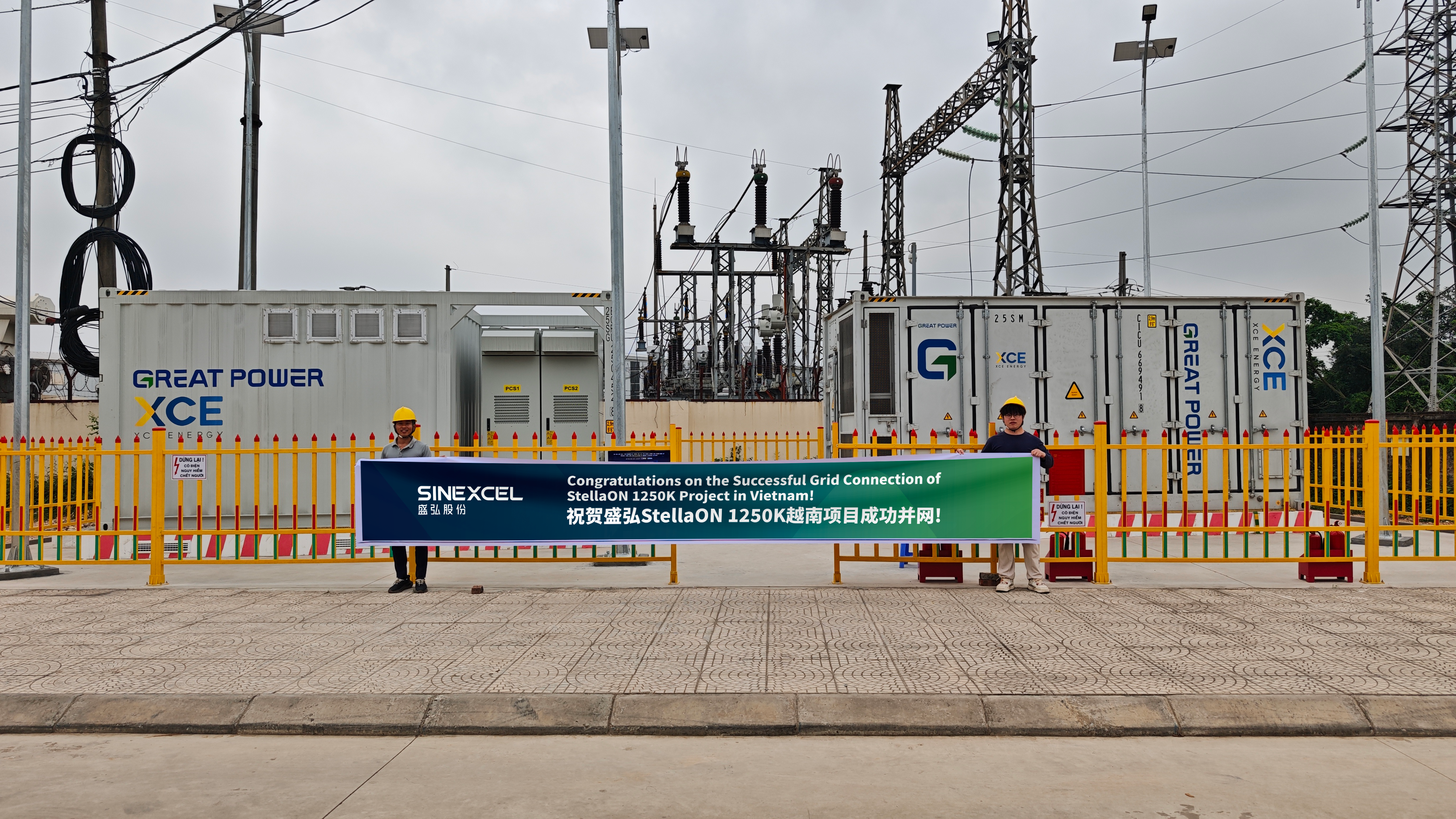
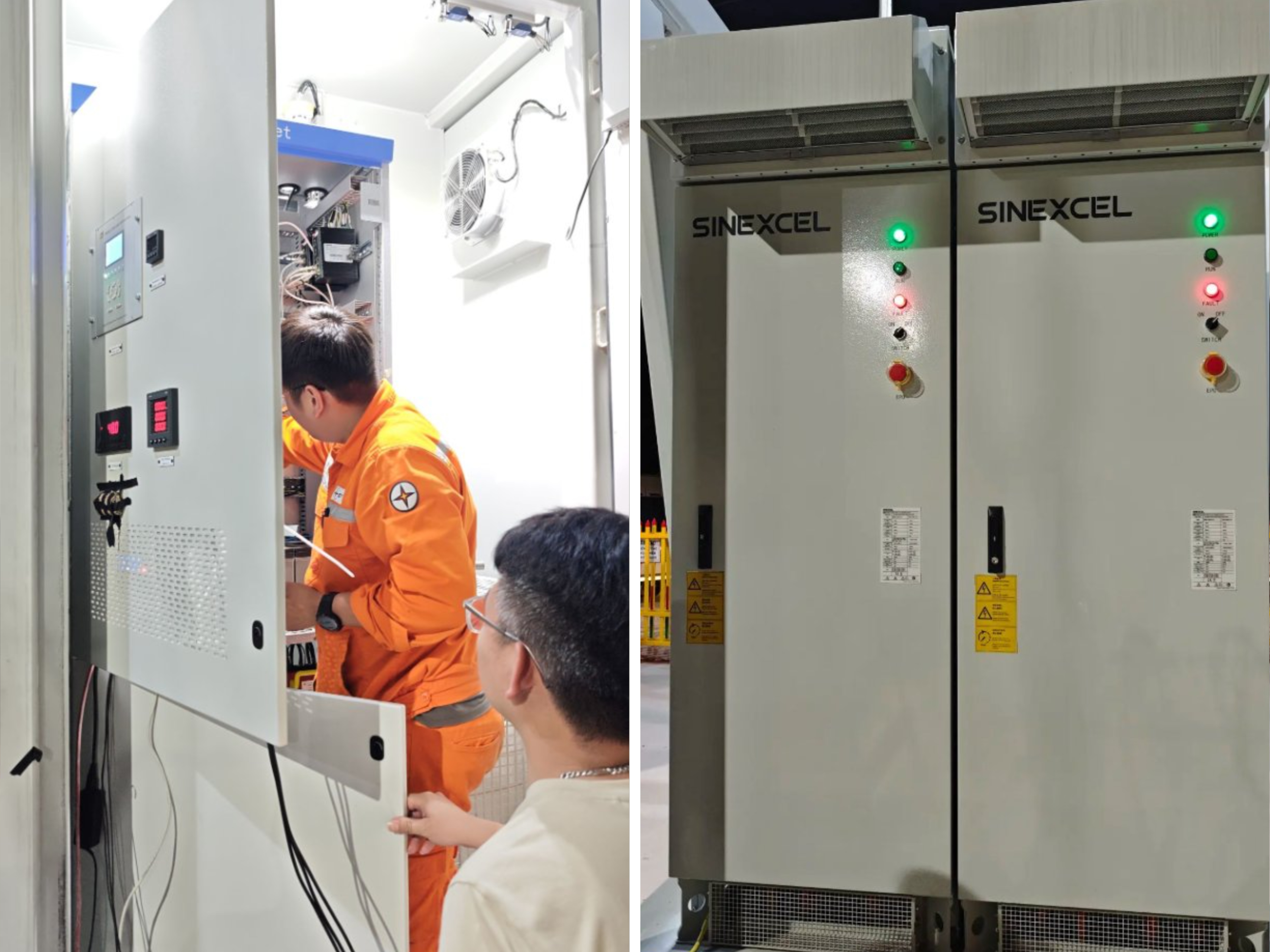
The project integrates:
The system supports multiple applications including:
and serves as a validation platform for evaluating large-scale storage applications across Vietnam’s national grid infrastructure.
Vietnam’s tropical climate presents particularly harsh operating conditions for power electronics, including:
The StellaON 1250K is specifically engineered to maintain full-rated power operation even under ambient temperatures up to 55°C, helping avoid the efficiency losses and accelerated component degradation commonly experienced by conventional systems in extreme environments.
This omni-adaptability across environmental and grid conditions further demonstrates SINEXCEL’s ability to support reliable utility-scale deployment in diverse global markets — from Southeast Asia to Europe’s rapidly evolving storage sector.
.png)
As energy storage projects scale globally, developers increasingly require not only certified products, but also reliable long-term service capability.
To date, SINEXCEL’s energy storage products have achieved:
.png)
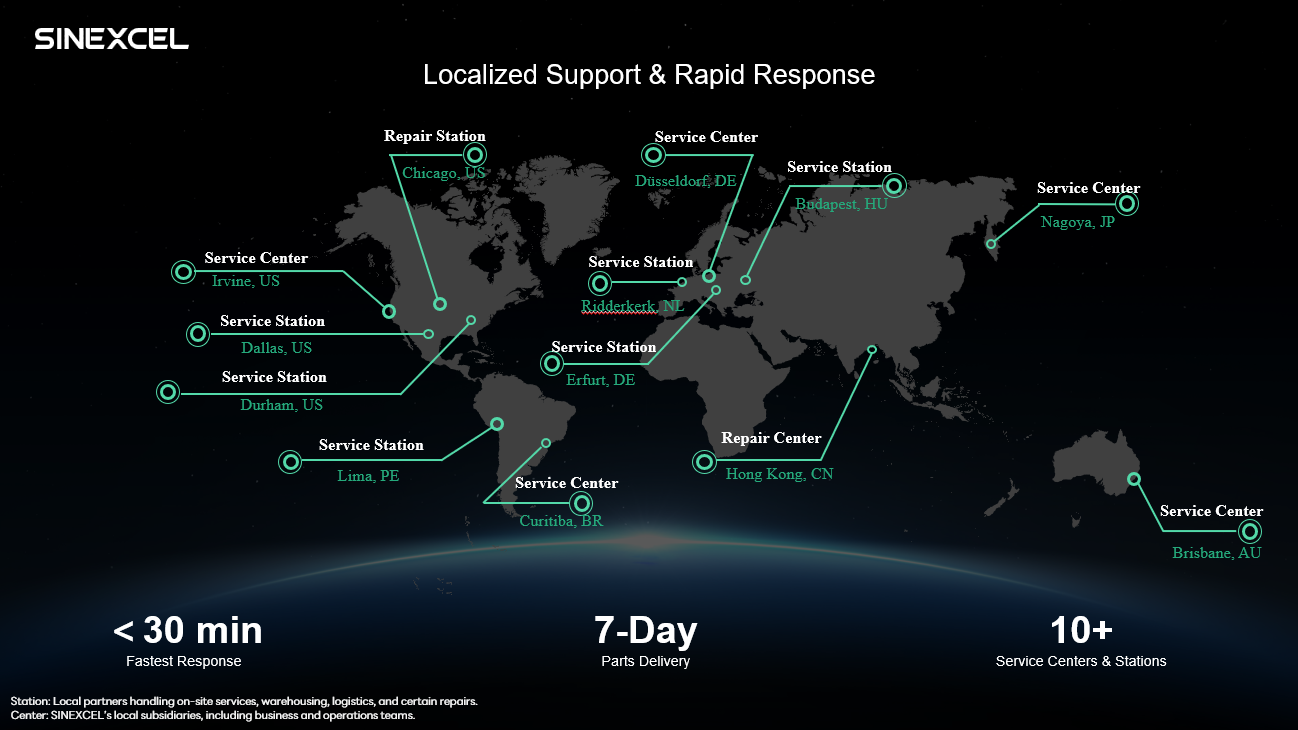
To better support international customers, SINEXCEL has established more than 10 localized service centers across:
This reinforces our long-term commitment to customers worldwide — because for SINEXCEL, delivery is not the end of a project, but the beginning of long-term partnership and service.
Czechia’s battery storage market is entering a structurally important transition phase.
Driven by policy reform, potential 6 GWh capacity by 2030, and strong near-term market economics, the country is evolving from a nascent storage market into a Central European flexibility hub.
With scalable PCS technologies, advanced grid-support capabilities, and growing project experience across Europe, SINEXCEL is committed to supporting developers, utilities, EPCs, and investors in building a more resilient and future-ready energy system.
To learn more about SINEXCEL’s energy storage solutions, please visit:
SINEXCEL Energy Storage Solutions
Or contact our team:
brand@sinexcel.com
Czech Republic - Electricity generation
Czech government approved its updated National Climate and Energy Plan
Czechia considers stop to double taxation on solar + storage projects
Czech Energy Act Amendment – A Step Towards a Clean Future?
Czechia’s BESS set for growth, Aurora forecasts 5-year payback and 15%+ IRR for 2026 assets
Study: Czechia continues to lag significantly behind in the EU in the use of solar and wind energy
Utility-scale BESS to drive Czechia’s storage market



I have read and agree to the Privacy Notice.
SINEXCEL conducts all business correspondence and external communications exclusively through email addresses ending in @sinexcel.com, @sinexcel.cn, or @global.sinexcel.com. Any email address using a different domain is not an official SINEXCEL email address. Please verify the sender's email address carefully to avoid potential loss.