Stock code
300693
If you've been following the European energy storage boom, you've probably seen the term "ancillary services" featured prominently in investor decks and market reports.
According to McKinsey's 2025 analysis of energy storage revenue potential, ancillary services currently account for 50–80% of the total revenue stack for deployed storage assets across major markets.
But what does it actually mean, and why should anyone building, financing, or operating a battery storage project care? This guide breaks it down: what ancillary services are, how they generate revenue for battery energy storage systems (BESS), why that revenue is currently experiencing a rapid decline, and what the industry can expect next.
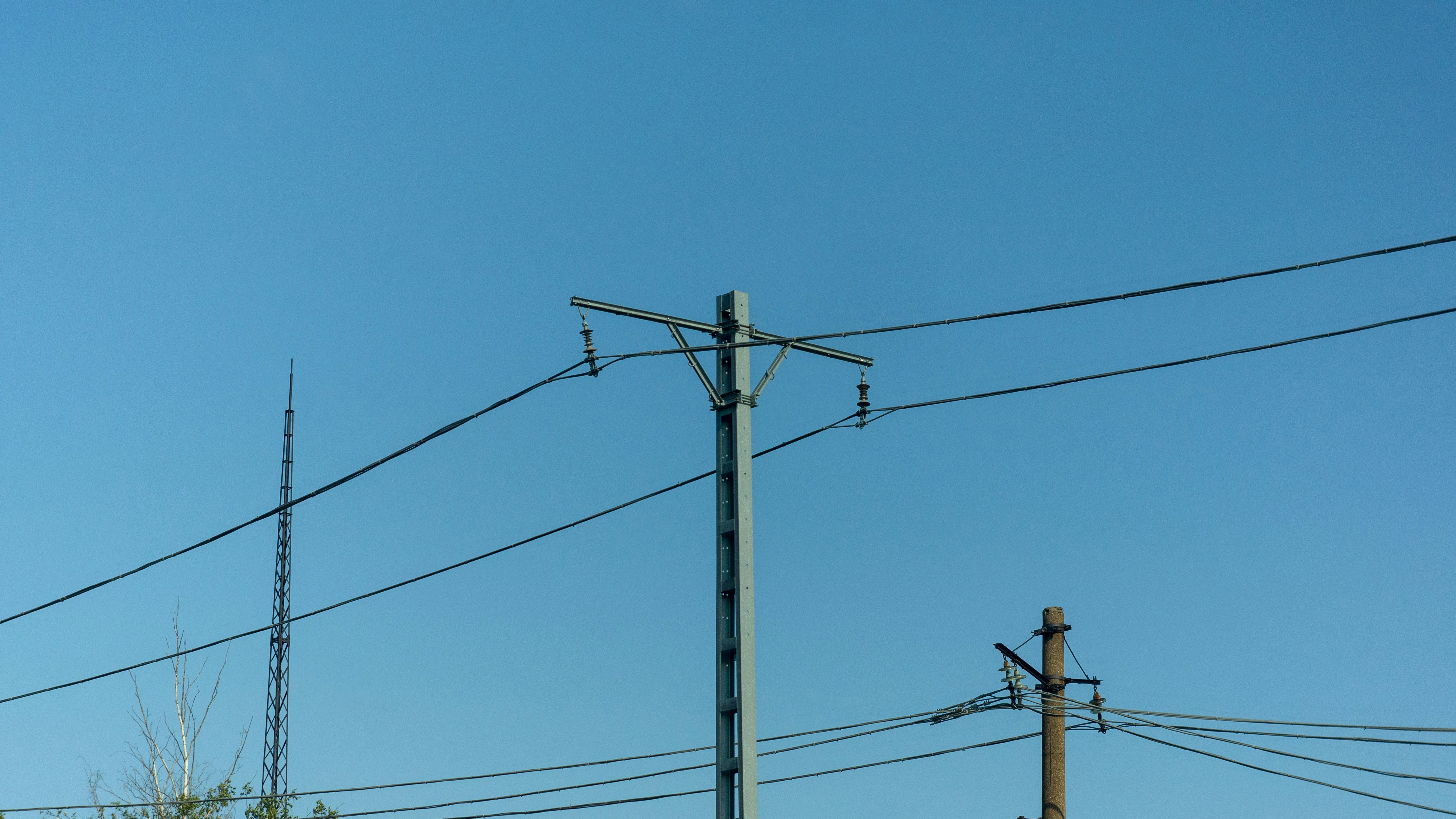
Ancillary services are the essential support functions that keep an electricity grid stable, safe, and reliable. They do not generate power themselves. Instead, they ensure that the power generated is delivered consistently without causing grid failures.
Think of the grid as a live concert. The power generators like coal, gas, wind, and solar act as the band, while the consumers are the audience. Ancillary services serve as the sound engineers, security personnel, and backup systems working behind the scenes to ensure the show runs flawlessly.
In practical terms, ancillary services include frequency regulation, voltage control, operating reserves, and black start capability. Transmission System Operators (TSOs) procure these services from qualified providers. Historically, frequency regulation has been the single most lucrative service for battery storage.
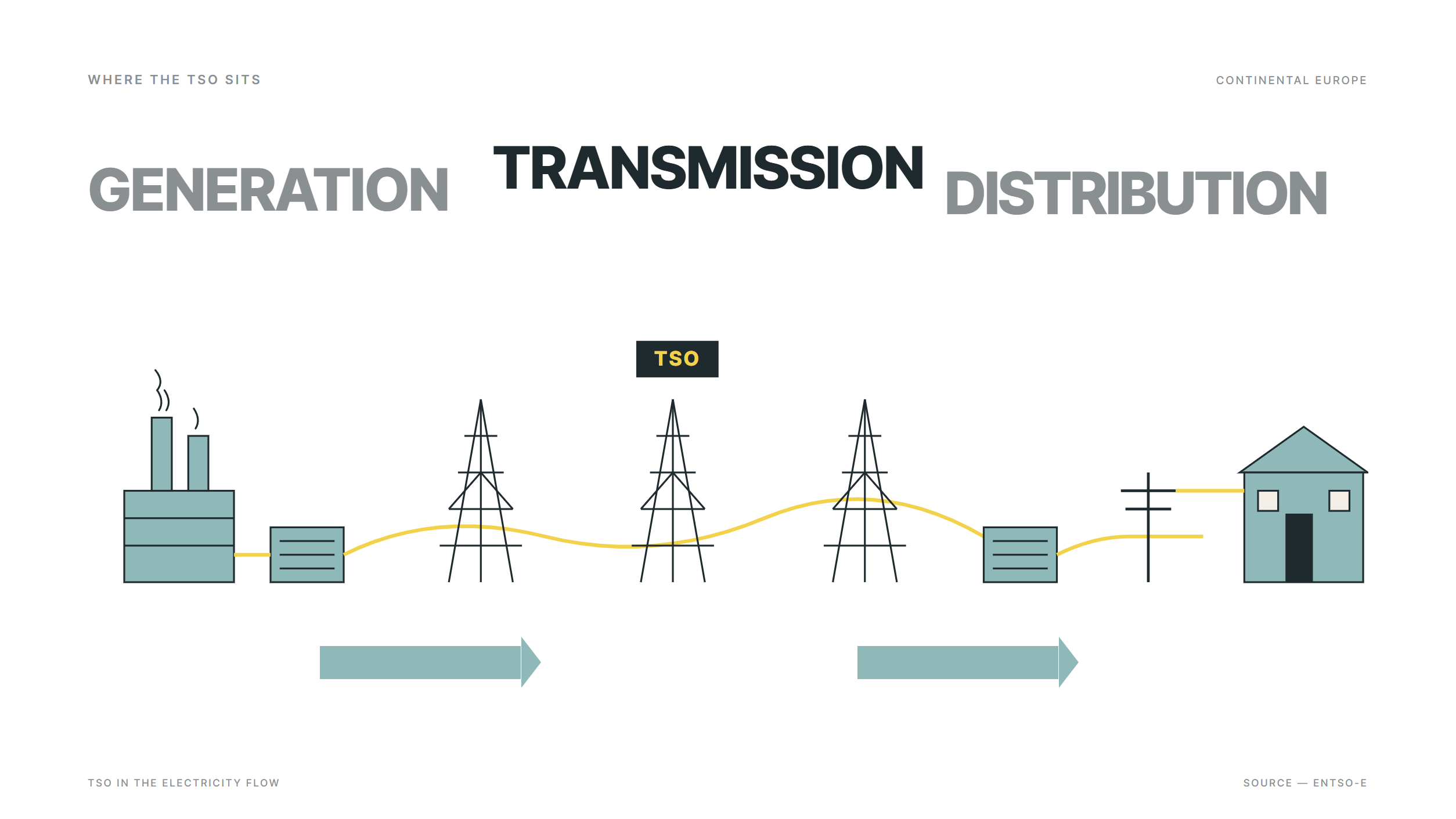
Europe's synchronous grid operates at precisely 50 Hz. This frequency reflects the real-time balance between electricity supply and demand. When a power plant unexpectedly goes offline, the frequency drops. Conversely, when demand suddenly falls, the frequency rises.
Deviations beyond ±0.2 Hz can trigger protective load shedding and, in extreme cases, blackouts. Traditionally, the massive spinning turbines inside coal and nuclear plants acted as a natural shock absorber. Their physical rotational inertia resisted sudden frequency changes, buying the grid precious seconds to react.
However, Europe is rapidly phasing out nuclear and retiring 29 GW of coal capacity by 2030. Modern wind turbines and solar panels connect to the grid through power electronics, meaning they lack this spinning mass and natural inertia. As the grid loses its traditional shock absorbers, battery storage systems are stepping in to fill the gap.
Battery storage systems can respond to frequency deviations in milliseconds, making them orders of magnitude faster than any conventional gas turbine. In Europe, frequency regulation is organized into a layered defense system. Each layer activates in a specific sequence, functioning much like tiers of emergency response.
.png)
The early economics were almost too good to be true.FCR pays for standby power capacity (MW) rather than delivered stored energy (MWh). Consequently, a small one-hour battery, such as a 10 MW / 10 MWh system, could offer the same instant response as a much larger four-hour system while requiring a fraction of the capital expenditure.
Developers deployed cheap, short-duration batteries and collected premium standby fees from grid operators desperate for millisecond-fast frequency response.
In the UK, a frequency service called Dynamic Containment was paying over £20/MWh in 2022, with peaks near £80/MWh. At the time, 84% of British BESS revenues came from frequency response. Similarly, in Germany, FCR capacity prices reached impressive heights around €8,500/MW/month in early 2024.
It functioned effectively as a gold rush for early movers.
Because the pool is shallow and the swimmers are many.
Frequency regulation markets are characterized by analysts as shallow revenue pools because the total capacity demand is very small relative to the overall power system. Wood Mackenzie's research describes FCR as "typically well below 1% of system peak demand in GW terms." Once battery capacity exceeds this niche demand, prices inevitably plummet.
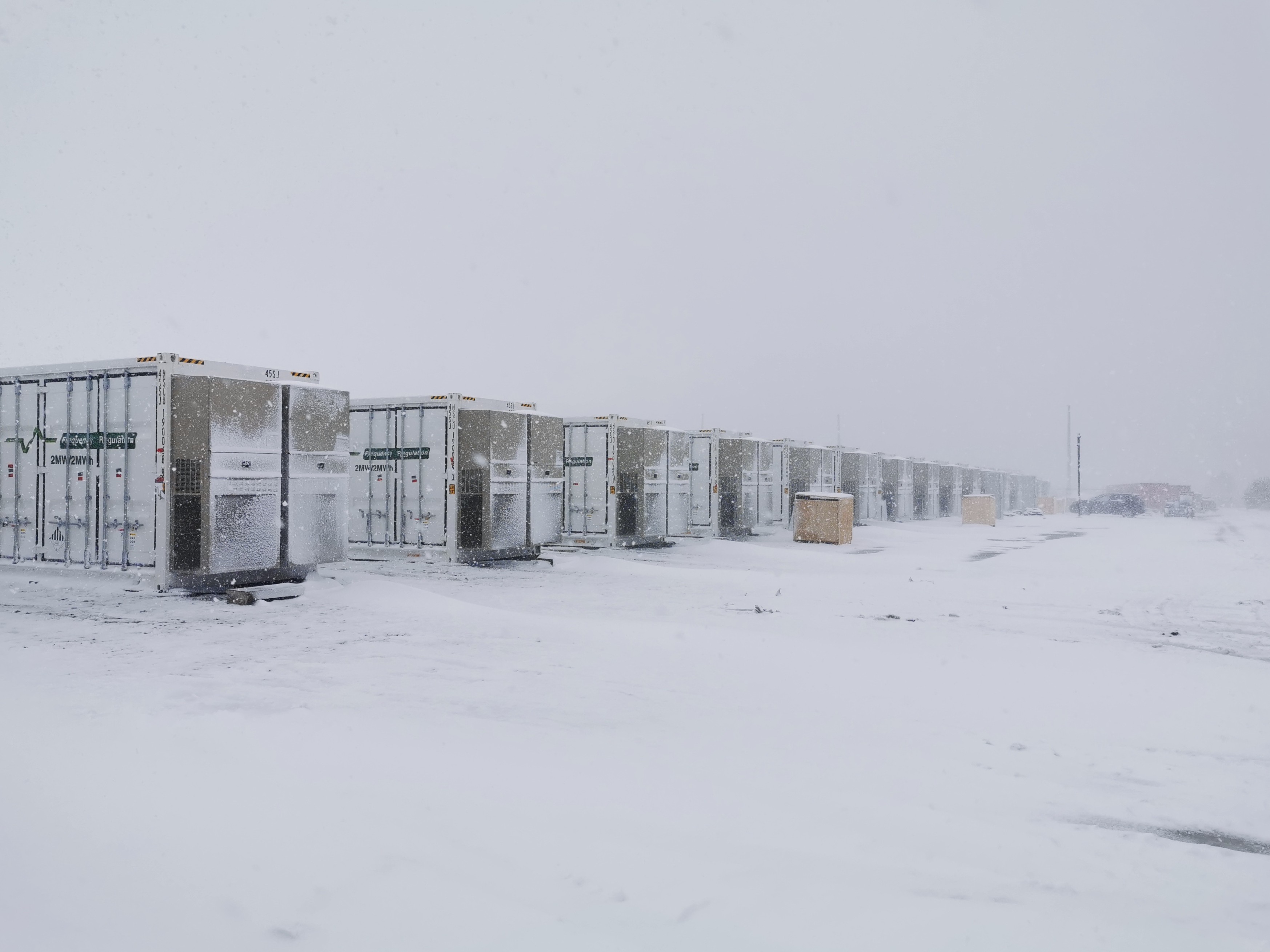
A 2MW/2MWh Frequency Regulation Project in U.S.
This exact scenario is playing out across Europe:
In Germany, prequalified battery capacity for FCR exceeded the total market need (570 MW) as early as 2023. FCR prices subsequently dropped from ~€8,500 to ~€3,200/MW/month by mid-2025. Analysts at Capstone DC project that relying on ancillary services for 67% of a typical German two-hour battery's income is an unsustainable share, as prequalified capacity fully exceeds demand.
In Great Britain, Dynamic Containment prices plummeted from £20+/MWh to average less than £1.50 per MWh by early 2024, with lows below 50p/MWh. Frequency response's share of total BESS revenue dropped from 84% in 2022 to roughly 20% by 2024. The UK market has since pivoted hard toward wholesale arbitrage and the Balancing Mechanism.
In France, batteries already supply 40–50% of primary reserve capacity despite only ~1 GW of installed BESS, leaving minimal room for newcomers.
The lesson is clear: any single ancillary service market will saturate quickly once BESS deployment scales up. Developers who build their business cases around a single product are exposing themselves to immense risk.
The collapse of standalone ancillary service revenues has forced two structural shifts:
.png)
For developers and EPCs, this isn't a nice-to-have — it's a compliance requirement and a revenue opportunity. Grid-forming batteries will be first in line for new paid inertia services as they emerge across European markets.
FLOWCAST breaks down the business and technology of global energy storage clearly, accurately, and without jargon. Follow us for more.
https://www.entsoe.eu/network_codes/eb/picasso/
https://www.entsoe.eu/news/2025/11/04/entso-e-publishes-phase-ii-technical-report-on-grid-forming-requirements/
https://www.woodmac.com/press-releases/european-battery-storage-deployment-expected-to-grow-45-year-over-year-to-16gw-in-2025-as-german-market-faces-500-gw-connection-requests-grid-bottlenecks-and-looming-revenue-canniblisation/
https://capstonedc.com/insights/europes-battery-storage-edge/
https://www.latitudemedia.com/news/the-uks-battery-market-can-boom-again/
https://www.ucl.ac.uk/bartlett/sites/bartlett/files/2025-09/EIB%20Financial%20Appraisal%20Report.pdf
https://www.next-kraftwerke.com/knowledge/frequency-containment-reserve-fcr
https://www.next-kraftwerke.com/knowledge/afrr
https://gemenergyanalytics.substack.com/p/focus-on-european-power-reserves
https://www.mordorintelligence.com/industry-reports/europe-battery-energy-storage-system-market
https://www.ess-news.com/2025/11/12/europe-moves-to-mandate-grid-forming-capability-for-new-storage-over-1-mw/
https://europeanbessindex.com/https://www.amprion.net/Energy-Market/Market-Platform/Control-Energy/https://enkiai.com/batteries/top-10-mega-battery-projects-in-europe-for-2025
https://en.wikipedia.org/wiki/Ancillary_services



I have read and agree to the Privacy Notice.
SINEXCEL conducts all business correspondence and external communications exclusively through email addresses ending in @sinexcel.com, @sinexcel.cn, or @global.sinexcel.com. Any email address using a different domain is not an official SINEXCEL email address. Please verify the sender's email address carefully to avoid potential loss.