Stock code
300693
Romania is quickly emerging as one of the most promising energy storage markets in Central and Eastern Europe. Driven by ambitious renewable targets, supportive policy frameworks, and EU-backed funding mechanisms, the country is entering a critical phase where energy storage becomes essential for maintaining grid stability and unlocking further renewable growth.
For technology providers and project developers, understanding Romania’s evolving policy environment and grid challenges is key to unlocking the opportunities ahead.
.jpg)
Energy storage has become a strategic priority for Romania’s energy transition.
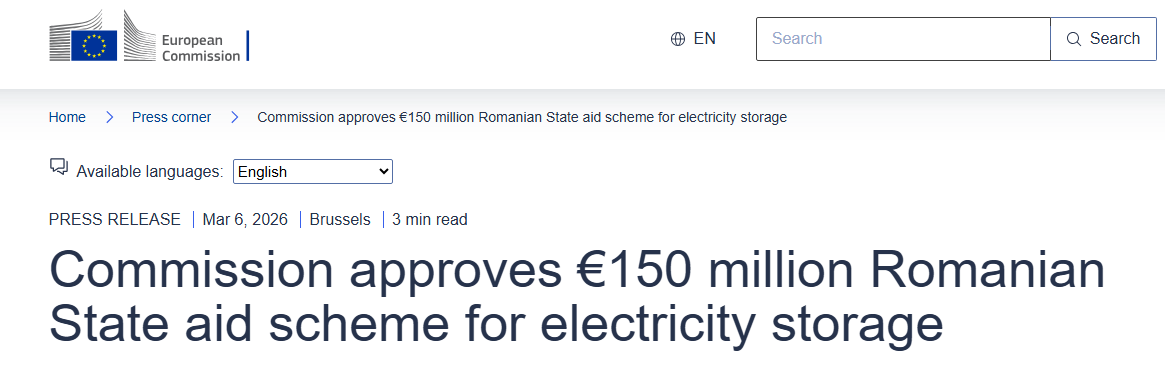
Recently, the European Commission approved a €150 million Romanian support scheme under the Clean Industrial Deal State Aid Framework (CISAF) to accelerate the deployment of battery storage. The scheme aims to install at least 2,174 MWh of new electricity storage capacity, funded through the EU Modernisation Fund. The support will be delivered through competitive tenders and investment grants for new standalone battery energy storage systems.
This initiative is designed to support the integration of variable renewable energy sources such as wind and solar while improving flexibility in the national electricity system.
At the national level, Romania has also introduced Law 255/2024, which further strengthens demand for storage.
The regulation requires:
Existing prosumers must comply with these requirements by 31 December 2027, electricity exported to the grid will be limited to 3 kW. This regulation is expected to significantly accelerate the deployment of distributed storage systems across the country.
At the same time, Romania’s Contracts for Difference (CfD) scheme provides renewable energy developers with 15-year price guarantees, supported by a €3 billion EU aid program, strengthening investor confidence in renewable and storage projects.
.png)
Together, these policy tools are creating a strong foundation for long-term energy storage growth.
Romania’s updated National Energy and Climate Plan (NECP) sets ambitious targets:
However, the current storage base remains very limited.
.png)
Romania currently operates only a few hundred megawatts of battery storage capacity, while the country may need around 4 GW of storage by 2030 to support grid flexibility and renewable integration.
As renewable generation expands rapidly, this gap is expected to widen. The country has already seen significant solar growth, and the expansion of wind and hybrid renewable projects is creating increasing volatility in wholesale electricity markets.
Analysts therefore expect battery energy storage systems (BESS) to become a key investment segment in Romania’s power sector, with billions of euros expected to flow into new projects over the coming decade.
Despite the strong market potential, Romania’s energy transition also faces several structural challenges.
1. Increasing Renewable Volatility
With rapid growth in solar and wind generation, the grid must handle larger fluctuations in power output. Without sufficient storage, renewable curtailment and balancing costs may increase.
2. Grid Flexibility and Stability
Romania’s power system is undergoing structural changes as coal generation is gradually phased out and new renewable capacity comes online. Maintaining grid frequency stability and inertia is becoming more complex.
3. Integration of Large-Scale Renewable Projects
Several large hybrid renewable projects (solar, wind, and storage) are already under development, requiring advanced control capabilities and high-performance power conversion systems to ensure safe and efficient operation.
These challenges make advanced energy storage solutions increasingly essential.
With extensive experience in utility-scale and commercial energy storage projects worldwide, SINEXCEL provides a comprehensive portfolio designed to meet the evolving needs of markets like Romania.
SINEXCEL has developed a complete utility-scale product architecture, ranging from 750HVDC Cabinets to 10 MW MV integrated stations, enabling flexible deployment across various large-scale storage scenarios.
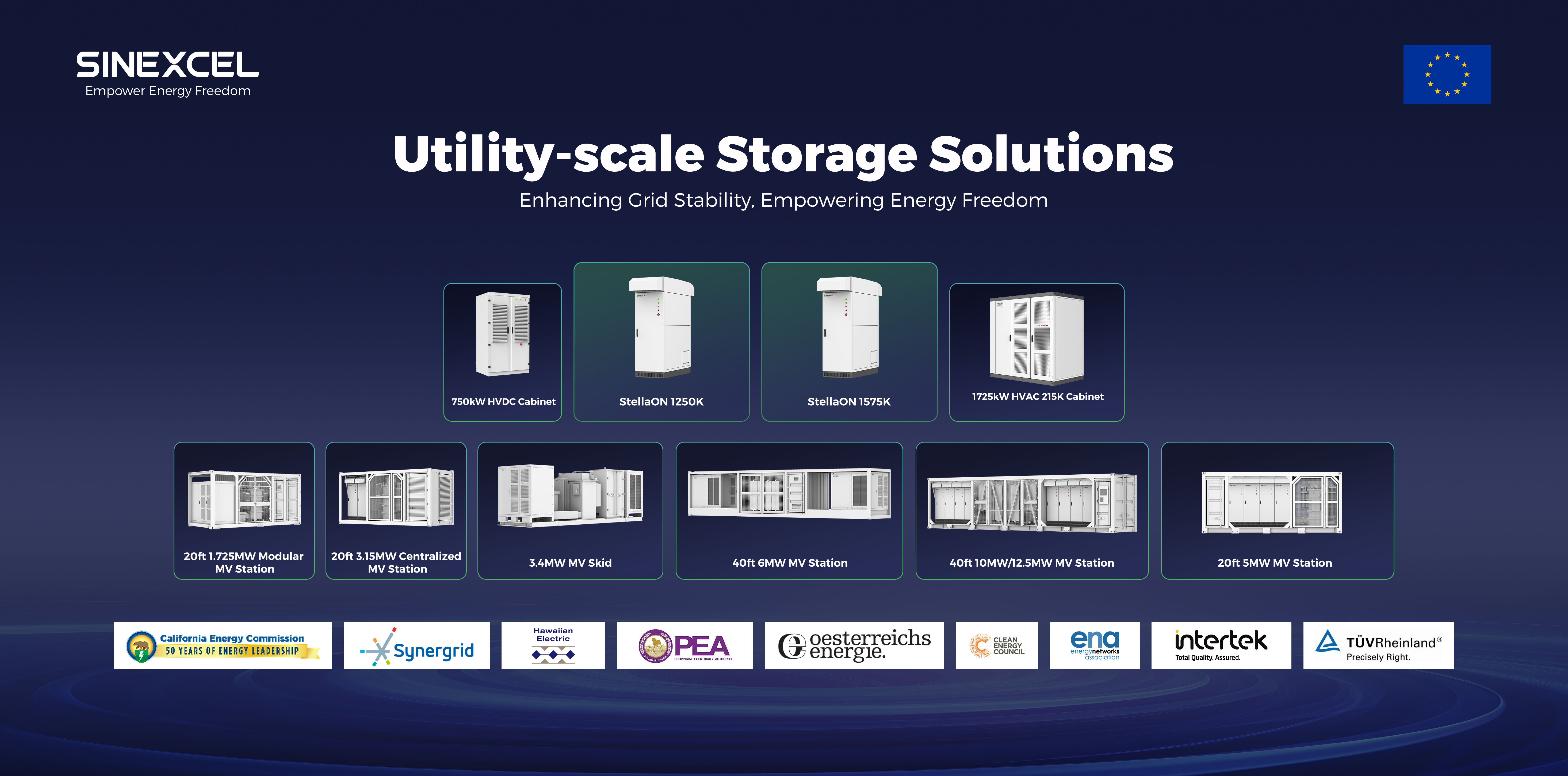
At the core of this portfolio is the StellaON 1250K/1575K PCS, engineered to optimize:
With a focus on lifecycle efficiency and adaptability across diverse environmental, load, and grid conditions, it enables stable, high-performance operation in demanding large-scale deployments. Rather than focusing on a single operational metric, this comprehensive engineering approach ensures that project developers can achieve a significantly lower levelized cost of storage (LCOS) while maintaining maximum uptime.
The system supports multiple medium-voltage configurations:
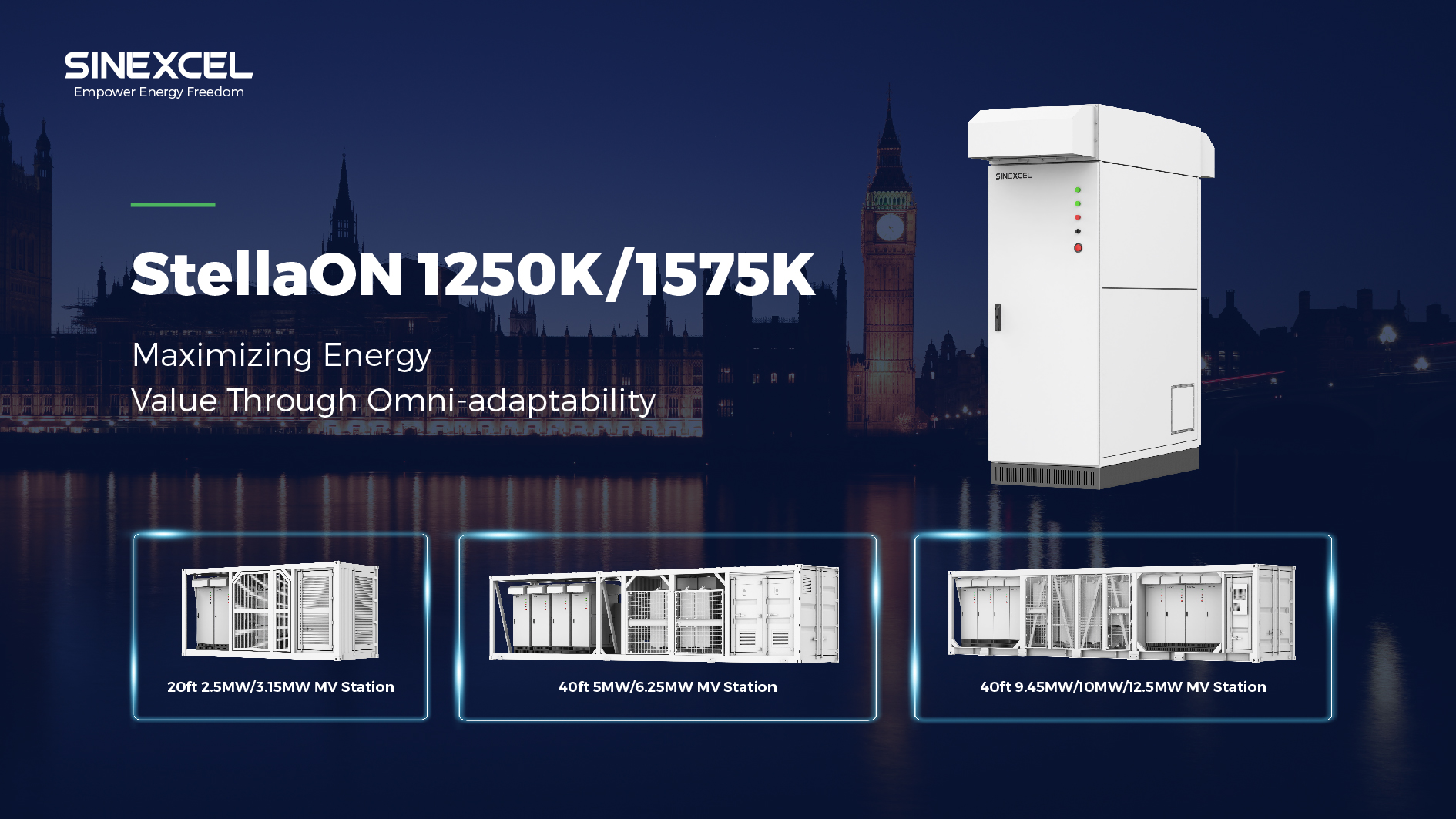
To address grid stability challenges in renewable-heavy systems, SINEXCEL has developed five advanced grid-forming technology systems, including:
These capabilities allow energy storage systems to support grid resilience even in complex operating environments.
Key performance advantages include:
Together, these features enable stable operation under demanding grid conditions.
.png)
Beyond utility-scale projects, SINEXCEL also provides solutions tailored for C&I energy storage and microgrid applications, including 30 kW, Sirius 135K, 160 kW, and 500 kW systems.
These solutions help businesses:
.png)
SINEXCEL’s technology is already supporting renewable integration projects in Romania. One example is the two projects located in Călărași County and Prahova County.
Each project integrates a 10 MW / 40.12 MWh battery energy storage system (BESS) designed to enhance grid flexibility and improve the utilization of solar power generation. By storing excess renewable electricity and releasing it during peak demand periods, the system helps stabilize the local grid and optimize energy dispatch.
In this project, SINEXCEL provided the 40ft 10MW MV Station powered by StellaON 1250K PCS, enabling efficient energy conversion and reliable grid interaction. The solution ensures stable system operation while supporting renewable energy integration.
.png)
A reference site generated by AI
To date, SINEXCEL’s energy storage products have obtained market access in over 40 countries, with more than 60 certified models. Its business spans six continents and over 60 countries and regions worldwide, with cumulative installed capacity exceeding 17GW / 50GWh and more than 5,000 projects successfully deployed.
.png)
To better serve global customers, SINEXCEL has established over 10 service centers across Europe, North America, and the Asia-Pacific region—reinforcing its commitment that delivery is not the end, but the beginning of long-term service.
As Romania accelerates its renewable energy transition, energy storage will play a critical role in ensuring grid stability, improving flexibility, and maximizing renewable utilization.
With scalable technology, advanced grid-forming capabilities, and global project experience, SINEXCEL is committed to supporting developers, utilities, and partners in building reliable and future-ready energy infrastructure.
To learn more about SINEXCEL’s energy storage solutions, please visit:
https://en.sinexcel.com/energy-storage/
Or contact our team:
brand@sinexcel.com
Source:



I have read and agree to the Privacy Notice.
SINEXCEL conducts all business correspondence and external communications exclusively through email addresses ending in @sinexcel.com, @sinexcel.cn, or @global.sinexcel.com. Any email address using a different domain is not an official SINEXCEL email address. Please verify the sender's email address carefully to avoid potential loss.