Stock code
300693

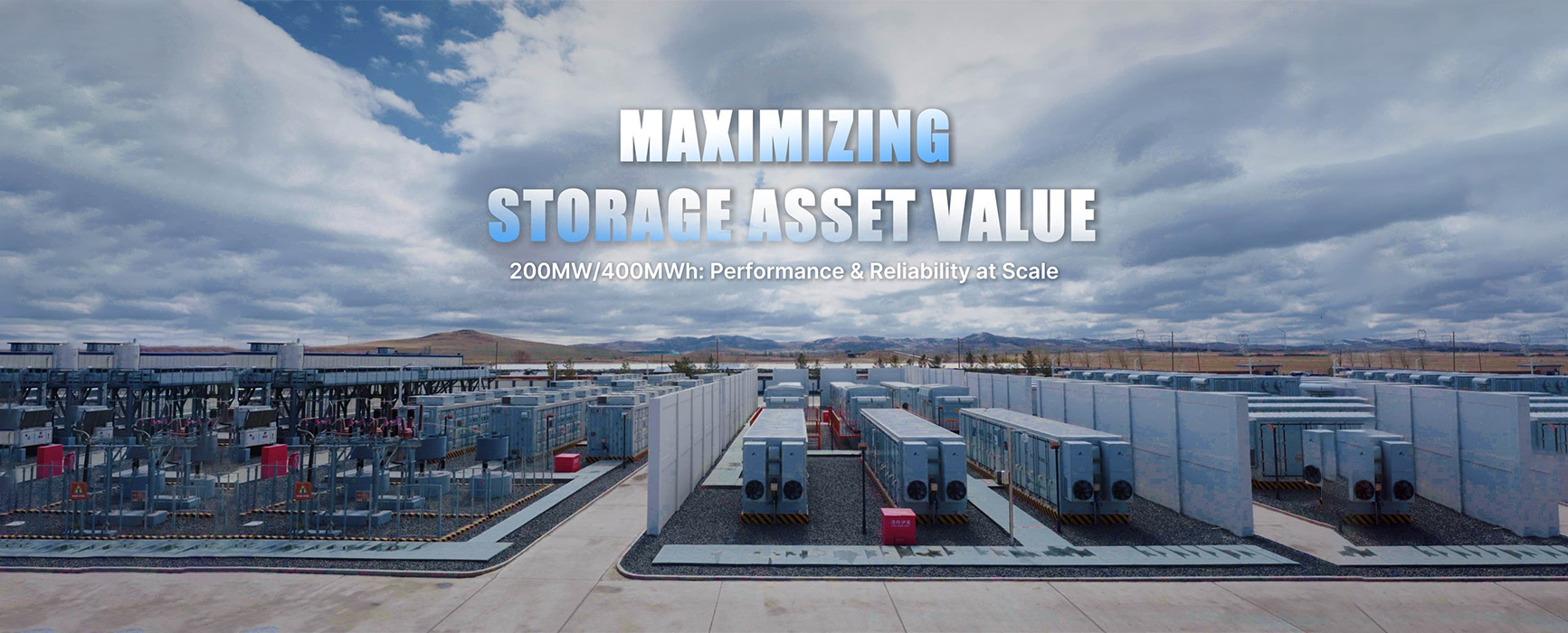
In Inner Mongolia, North China's first large-scale building-integrated Battery Energy Storage System (BESS) has entered commercial operation, establishing a new benchmark for utility-scale energy storage deployment.
The 300 MW/600 MWh storage facility is connected to a 2 GW wind power base and supports renewable energy integration, grid stability, and the transmission of clean electricity to Beijing, Tianjin, and Hebei. SINEXCEL supplied 200 MW of power conversion capacity through 120 customized 1725 kW PCS units, helping ensure reliable and efficient system operation.
More than a large-scale storage project, the facility represents a new approach to BESS deployment. Its success depended not only on system capacity, but also on customized engineering, environmental resilience, cross-functional coordination, and rapid project execution.
Far exceeding a simple capacity expansion, this installation redefines how energy storage systems are deployed. Its stable operation hinges on three core innovations: robust environmental protection, anti-accumulation architecture, and optimized long-duration energy management
The project tested not only an innovative storage architecture, but also SINEXCEL's ability to translate complex engineering requirements into predictable project outcomes.
Unlike conventional containerized BESS projects, this facility adopted a building-integrated architecture supported by centralized thermal management.
The design introduced new requirements for PCS installation, electrical connection, heat dissipation, and overall system integration. A customized solution was therefore needed to ensure that the PCS could be safely and efficiently integrated into the building-based energy storage system.
Inner Mongolia experiences severe winters, frequent sand and dust, heavy snow, and an annual temperature range of up to 72.6°C.
These conditions placed stringent requirements on enclosure protection, low-temperature performance, environmental adaptability, and long-term equipment reliability.
To meet the project's safety and integration requirements, all busbar connections had to be completed on-site.
Combined with a two-month schedule covering installation, commissioning, system tuning, and grid connection, the project required close coordination among engineering, procurement, delivery, service, and EPC teams.
To meet the project's specific requirements, SINEXCEL customized 120 units of 1725 kW PCS and optimized both product design and system integration.
The solution addressed three priorities: integration with the building-based architecture, reliable operation under extreme environmental conditions, and rapid delivery under a highly compressed schedule.
SINEXCEL developed an IP68-rated direct busbar connection solution specifically for the project's building-integrated architecture.
Compared with conventional cable or copper-bar connection methods, the customized design:
Reduces the risk of localized overheating caused by inconsistent cable resistance
Provides a higher level of connection protection
Improves installation flexibility
Supports reliable high-power integration within the building-based storage system
Together with the facility's centralized thermal management system, the PCS solution helped reduce auxiliary power consumption by approximately 75%. This improves overall system efficiency while lowering long-term operating costs.
Reliable operation throughout Inner Mongolia's demanding climate was another critical requirement.
Featuring a NEMA 3R enclosure and robust environmental protection, the PCS is designed to maintain stable performance under conditions including:
Seasonal temperature variations of up to 72.6°C
Sandstorms and high levels of airborne dust
Snow accumulation of up to 500 mm
This environmental adaptability supports long-term operational reliability while helping reduce maintenance requirements throughout the system lifecycle.
When busbar delivery delays placed additional pressure on the project schedule, SINEXCEL quickly mobilized its R&D, procurement, project delivery, and service teams.
Working closely with the EPC contractor, the teams completed the necessary on-site adaptations, system commissioning, and performance verification without compromising the planned grid-connection schedule.
The project demonstrated how rapid coordination and engineering flexibility can prevent unexpected site conditions from becoming long-term delivery risks.
Reliable equipment is only one part of long-term storage asset performance. Fast and effective technical support is equally important when operational issues arise.
Through a combination of remote diagnostics and on-site technical support, SINEXCEL resolved an operational issue at the project site in less than 2 hours, helping minimize downtime and maintain high system availability.
This response capability is supported by SINEXCEL's global service infrastructure, which includes 10+ service centers across Europe, North America, and the Asia-Pacific region.
Through local technical teams, tiered service mechanisms, and clearly defined response procedures, SINEXCEL provides support tailored to different project configurations and operating environments.
Since entering full commercial operation in November 2023, the project has continued to generate tangible environmental, operational, and financial value:
Approximately 6.5 TWh of clean electricity transmitted annually
Approximately $3.53 million( €3.1 million) in annual project revenue
These results demonstrate how carefully engineered power conversion solutions can contribute not only to successful project delivery, but also to the long-term performance and commercial value of energy storage assets.
This project highlights SINEXCEL's ability to deliver more than high-efficiency PCS products.
Through tailored engineering, strong environmental adaptability, responsive service, and efficient execution, SINEXCEL helps utilities, developers, and EPC partners reduce integration risks, enhance system reliability, and maximize long-term asset value.
With over 17 GW of installed energy storage capacity and more than 5,000 deployments across 60+ countries and regions, SINEXCEL continues to support the next generation of utility-scale energy storage with proven, reliable solutions.